




Quick Links:
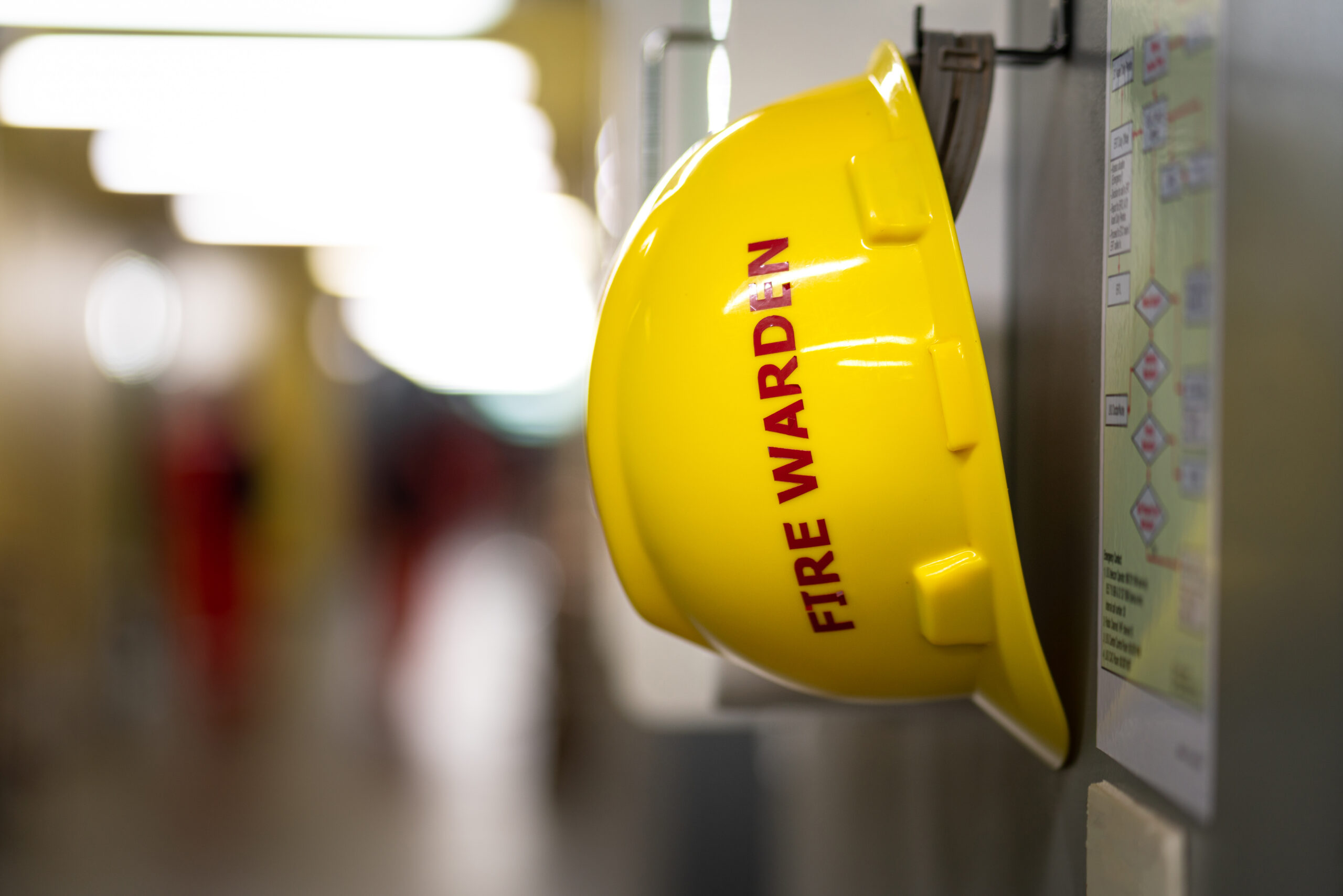

Fire Wardens play an important role in supporting fire prevention and the safe evacuation of KAUST buildings during an emergency. The KAUST Fire Warden Training Program equips designated personnel with the knowledge and practical skills needed to carry out both proactive fire-safety duties and emergency evacuation responsibilities. The program consists of online theory training followed by practical skills training delivered by the KAUST Fire Department (KFD), including hands-on fire extinguisher training. Both components must be successfully completed to achieve Fire Warden certification.
KAUST Fire Wardens support fire prevention, safe evacuation and effective communication during an emergency. These FAQs explain the Fire Warden role, training requirements and enrollment process.


A Fire Warden helps maintain fire safety within their designated area and supports the safe evacuation of building occupants during an emergency.
Fire Wardens have both proactive and reactive responsibilities. They help identify and address fire-safety concerns before an emergency occurs and assist occupants and KFD when a fire alarm activates.
KAUST HSE, together with relevant stakeholders, determines the number of trained Fire Wardens required following an assessment of the specific workplace or building.
The assessment considers factors such as:
Following the assessment, a target number of Fire Wardens may be established for a particular building or area.
As general guidance, one Fire Warden per twenty (1:20) employees per department may provide adequate coverage, although this may vary depending on the occupancy, complexity, size and risk profile of the workplace.
No. Fire Warden Training is not mandatory for everyone.
You may be asked by your manager to undertake the role if trained Fire Wardens are required within your area or department.
Immediately stop what you are doing and evacuate the building.
Never delay your evacuation or put yourself in danger.
KAUST buildings are currently recommended to have a minimum of two trained Fire Wardens per area per floor as a rule of thumb. HSE provides guidance, recommendations and practical training support.
Fire Wardens help maintain good fire-safety practices within their designated area. This includes being alert to conditions or behaviors that could affect safe evacuation or increase the risk of fire.
Fire Wardens should:
When a fire alarm activates, a Fire Warden should put on their Fire Warden vest and support the safe evacuation of their designated area.
Where it is safe to do so, Fire Wardens should:
A Fire Warden should never put themselves in danger while carrying out these duties.
A Building Evacuation Plan, or BEP, sets out the arrangements for safely evacuating a particular building.
Fire Wardens should be familiar with the BEP for the building or area in which they work. Depending on the building, the BEP may include:
Fire Wardens should know how to access the BEP for their building and understand the arrangements relevant to their area.
A Personal Emergency Evacuation Plan (PEEP) is an individual plan for someone who may require assistance to evacuate a building or reach a place of safety during an emergency.
A PEEP may be required when a person cannot evacuate a building unaided in a prompt and safe manner.
The responsible manager develops the PEEP, and the relevant arrangements should be communicated and documented within the Building Evacuation Plan.
Fire Wardens should be aware of any PEEP arrangements relevant to their designated area and follow the established plan during an evacuation.
A Fire Warden’s priority is life safety and safe evacuation.
A Fire Warden should only attempt to extinguish a fire if they have been trained, feel confident to do so, have an appropriate extinguisher available and can act without putting themselves or others in danger.
If a fire cannot be safely extinguished:
Never put yourself in danger to fight a fire.
The theory component introduces the knowledge required to perform the Fire Warden role effectively. Topics include:
The theory component prepares participants for the practical training delivered by KFD.
The online theory component provides flexible and accessible learning and allows participants to develop the required knowledge before attending practical training.
However, online theory training alone is not sufficient for certification. Participants must also successfully complete the practical Fire Warden skills session, including hands-on fire-extinguisher training.
Registration for practical training becomes available after you have successfully completed the online theory training and the required quiz.
The practical training is delivered by the KAUST Fire Department at the Fire Station.
Follow these two steps:
Step 1: Complete the online Fire Warden theory component and successfully complete the quiz.
Step 2: Access to the practical training session is provided at the end of the online theory training quiz.
There is currently no payment required for the KAUST Fire Warden Training Program.
The KAUST Fire Warden Certificate is valid for two years following successful completion of both the required theory and practical training components.
HSE tracks successful completion of the KAUST theory and practical training components for the purpose of issuing the Fire Warden Certificate.
Departments are responsible for maintaining their Fire Warden records and ensuring that required training is renewed at least every two years, or sooner where required.
Managers should also ensure that sufficient trained Fire Wardens remain available within their areas when personnel or workplace arrangements change.
For questions about Fire Warden requirements, training, practical sessions or enrollment, contact:
KAUST Health, Safety and Environment (HSE) at hse@kaust.edu.sa